Malocclusion means that the teeth are not in normal bite. Since this affects the appearance of the teeth and the shape of the face, it can cause situations such as shyness, lack of self-confidence and a decrease in the desire to participate in social life in that individual. In addition, advanced malocclusions make it difficult to clean the teeth and cause gingival problems, negatively affecting functions such as eating and speaking.
Malocclusion Types
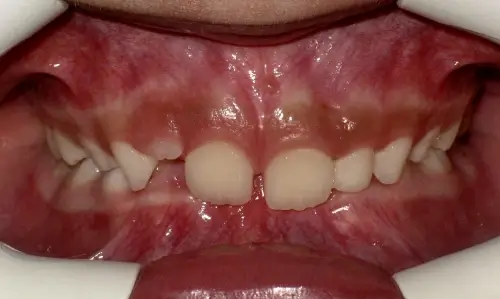
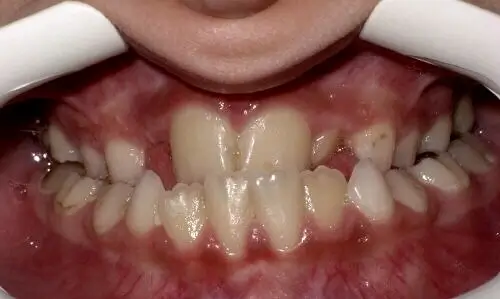
Crowding: Due to the narrowness of the jaws or the early extraction of milk teeth, the teeth may be positioned in front of the jawbone, behind, above, below or in rotation. Of these, it is very important to position the upper teeth in front. Because these teeth are damaged or even broken at the slightest trauma (ball coming, spoon and bottle cap contact).
Impacted teeth: The tooth does not take its place in the dental arch and remains embedded in the jawbone.
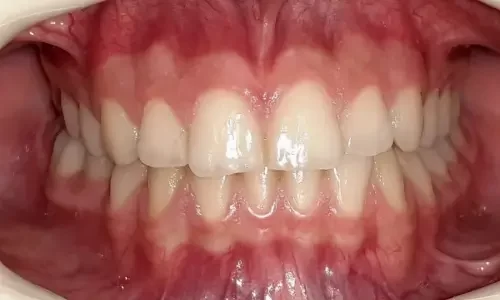
Deep bite (deck bise): When the teeth are closed, the upper front teeth cover the lower front teeth excessively.
Open bite: When the teeth are closed, the front or side teeth cannot reach the bite and there is a gap between the teeth.
Crossbite: At least one tooth in the anterior and posterior teeth is inward relative to the underlying tooth.
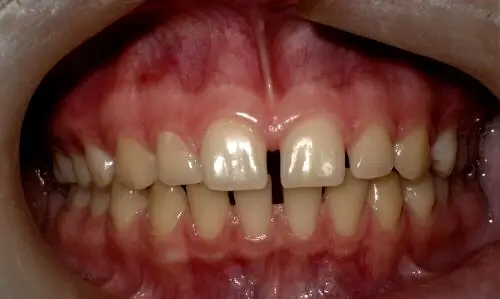
Diastema: There is a gap between the teeth, there is no contact relationship. It is caused by the large bone base on which the teeth sit, the teeth being smaller than normal, or the long frenulum.
Missing teeth: It is seen due to the absence of some congenital teeth. It can also occur due to tooth extraction due to caries and trauma.
What are the causes of orthodontic disorders (malocclusion)?
Prematurely extracted primary teeth: If decayed primary teeth are not treated by saying “it will change anyway”, if they are extracted prematurely, or if fluoridation and fissure sealant applications are neglected, malocclusions will occur. Permanent teeth cannot find a place to come out and crowding occurs.
Early permanent tooth loss: Permanent tooth extractions due to not treating caries in a timely manner cause crowding due to the movement of other teeth to that area.
Genetic factors: Especially jaw disorders are passed down genetically from generation to generation. In addition, hereditary tooth deficiencies, crowding problems and frenulum irregularities are also seen.
Bad habits: Habits such as thumb sucking, long-term use of pacifiers and bottles, tongue and lip sucking, and pencil biting also cause orthodontic disorders in teeth and jaw structures. Some connective tissue and muscle diseases also cause orthodontic disorders.